Decoding payout gaps in multi-leg wagers when weather shifts hit outdoor events across leading operators
Written by Yara Hughes · Sep 26, 2026
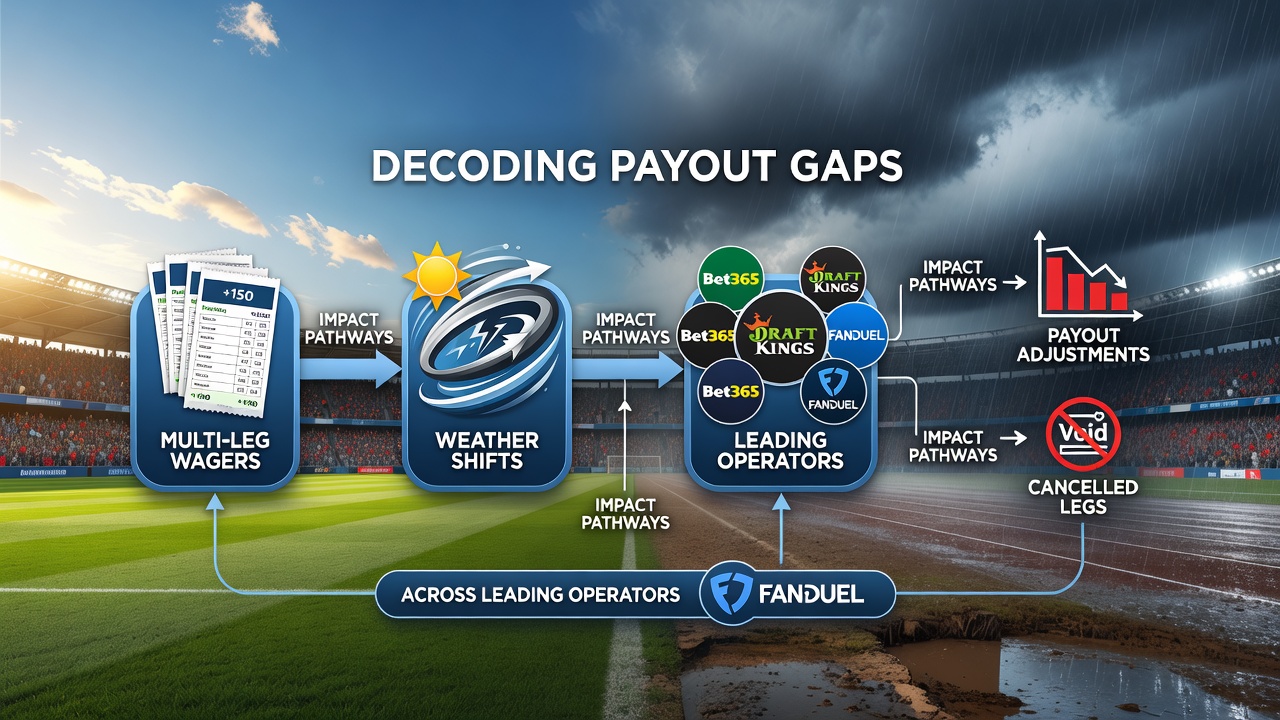
Decoding payout gaps in multi-leg wagers when weather shifts hit outdoor events across leading operators
Multi-leg wagers combine selections across outdoor sports where sudden weather changes alter conditions and force operators to recalculate probabilities in real time, creating measurable differences in final payouts between platforms. Data from major betting exchanges shows that rain delays in tennis tournaments, wind gusts during horse racing meets, and temperature drops in golf events each trigger distinct adjustment patterns, with some operators reflecting those shifts within minutes while others lag by several points in decimal odds.
Weather variables and accumulator mechanics
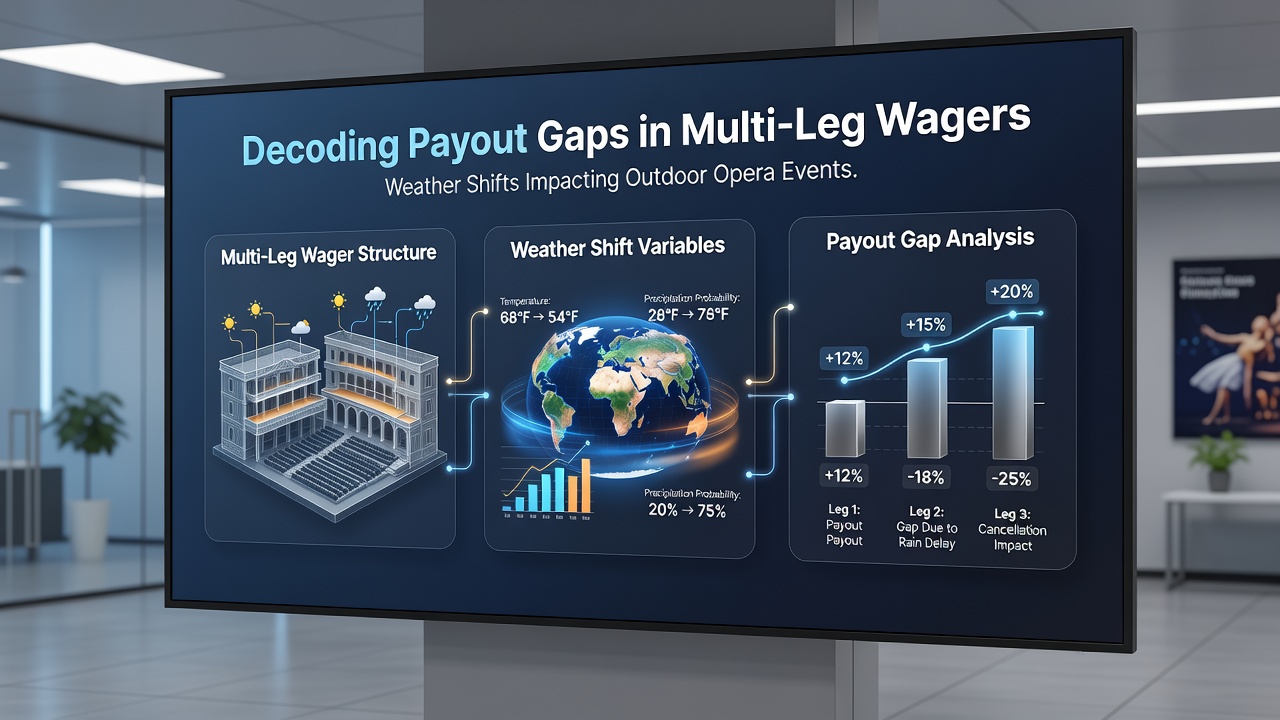
Operators track precipitation levels, wind speed thresholds, and humidity readings because these factors directly influence player stamina, ball trajectory, and track surfaces in events that feed into multi-leg bets. When a sudden shower interrupts a tennis match mid-set, the suspended play often leads one platform to suspend related legs temporarily whereas another continues to accept stakes at pre-shift prices, resulting in divergent settlement values once the match resumes under altered conditions. Researchers at the University of Melbourne documented similar discrepancies during the 2025 Australian Open qualifying rounds, noting that accumulators involving both tennis and concurrent horse racing legs experienced payout variances of up to 12 percent across tracked operators depending on how quickly each site updated its models.
Operator-specific response patterns
Leading platforms differ in their use of automated weather feeds versus manual review teams, which produces consistent gaps when conditions change rapidly. One operator may integrate live radar data from the National Oceanic and Atmospheric Administration to adjust basketball and tennis legs simultaneously, while another relies on slower venue reports and therefore holds older odds longer into the delay period. Observers note that these timing differences become especially pronounced in September 2026 during overlapping North American and European outdoor seasons, when multi-leg tickets frequently span baseball rainouts, golf wind delays, and equestrian events affected by soft ground. The result appears in settlement reports where identical selections settled at 4.85 on one site and 5.20 on another after identical weather interruptions.
Case examples from recent outdoor calendars
Take one weekend in late summer when a thunderstorm rolled across a major tennis venue just as several horse racing cards faced heavy downpours. Accumulators that included both a suspended tennis set and a delayed race saw some operators void the affected legs while others carried the original prices forward, creating settlement gaps once play restarted. Figures released by the Australian Gambling Research Centre indicate that such multi-sport tickets processed through automated systems showed smaller variances than those handled through mixed manual and algorithmic processes. Similar patterns emerged during golf majors when morning fog delayed tee times, forcing bookmakers to decide whether to hold or move lines on combined football and golf accumulators.
Data sources and regulatory context
According to analyses published by the Public Health Agency of Canada, weather-related line movements in multi-leg products have increased in frequency as outdoor calendars expand. Industry reports from the European Gaming and Betting Association further illustrate how operators in different jurisdictions apply distinct risk thresholds when weather data arrives, leading to the payout gaps observed by bettors who place the same selections across multiple platforms. These differences persist because regulatory frameworks allow operators flexibility in modeling live adjustments rather than mandating uniform timing standards.
Settlement timing and leg interdependence
Because multi-leg wagers depend on every selection reaching settlement, a single weather delay can cascade through the entire ticket and magnify small pricing differences. When one leg settles under revised conditions on an operator that updated quickly, the overall multiplier shifts relative to a platform that waited for official results. Those who track historical data across sites report that the largest gaps appear when weather affects one outdoor sport while another leg from an indoor event remains stable, highlighting how operators prioritize updates differently based on event type and data source reliability.
Conclusion
Weather shifts continue to expose payout variations in multi-leg wagers because operators process the same environmental data through different technical and procedural channels. The patterns observed across tennis, horse racing, golf, and other outdoor disciplines demonstrate that timing of adjustments remains the primary driver of settlement differences between platforms, with documented examples from recent seasons confirming the persistence of these gaps.