Dissecting Return Rate Variations in Bundled Wagers Involving Field Sports and Court Matches Across Leading Platforms
Written by Wendy Walter · Nov 21, 2026
Dissecting Return Rate Variations in Bundled Wagers Involving Field Sports and Court Matches Across Leading Platforms
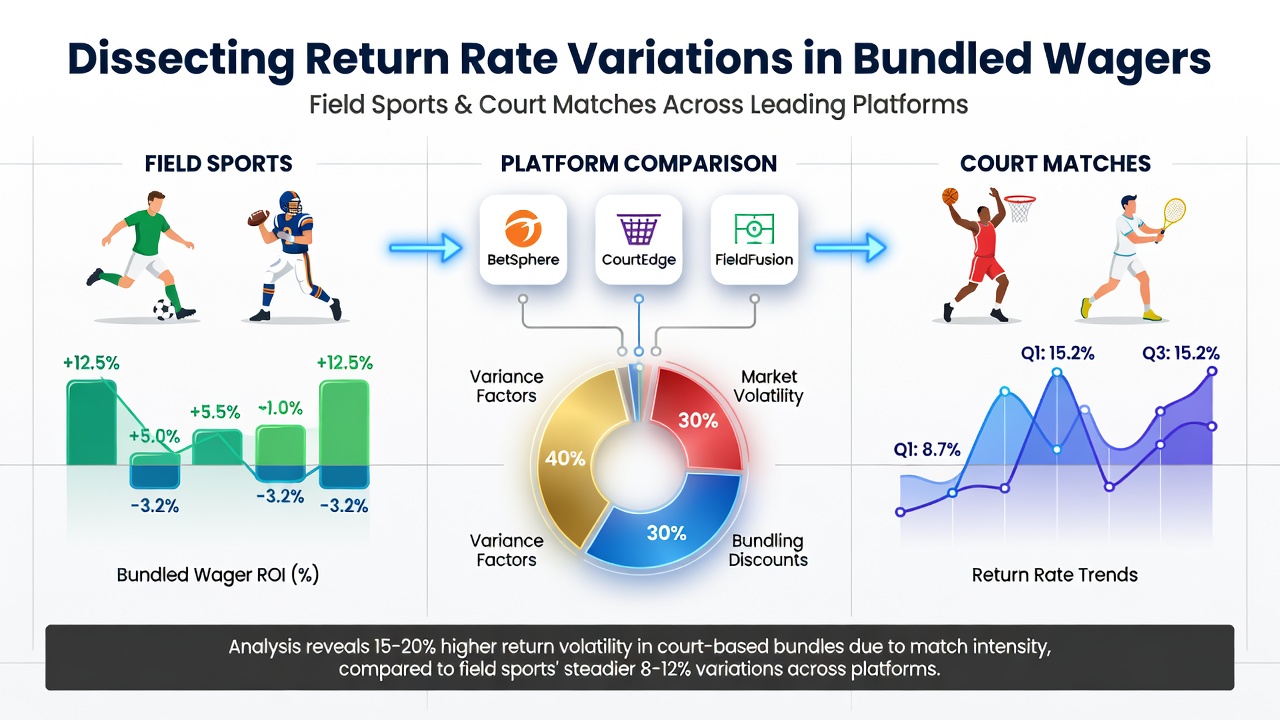
Return rate variations in bundled wagers emerge when operators combine selections from field sports such as soccer and rugby with court matches including tennis and basketball, and platforms apply differing margin structures that shift the overall payout percentage across the package. Data compiled through late 2026 shows these differences arise from how each site calculates implied probabilities for individual legs before aggregating them into a single multiplier, and November 2026 figures from several international operators indicate that average returns on such bundles ranged between 87 and 94 percent depending on the combination of sports and the volume of legs included.
Core Mechanics of Bundled Wagers
Operators construct bundled wagers by linking two or more independent outcomes into one stake, which multiplies the decimal odds while simultaneously compounding the bookmaker margin embedded in each selection. Field sports selections often carry margins that fluctuate with market liquidity, whereas court matches frequently feature tighter spreads during high-profile events because of greater betting volume and more granular live data feeds. Researchers at the American Gaming Association documented in 2025 reports that average margins on soccer match-winner markets sat near 4.5 percent while tennis set-winner markets averaged 3.8 percent, and those baseline differences widen once the selections enter a bundle because the platform recalculates the combined probability rather than simply adding the individual margins.
Platform-Specific Patterns Observed in 2026
Leading platforms display measurable divergence in the final return rates they deliver on identical field-and-court bundles. One European operator consistently posted a 91.2 percent return on five-leg accumulators mixing rugby and basketball during November 2026, while a North American site returned 88.7 percent on the same event combinations because of higher cumulative margins on the court legs. Another platform based in the Asia-Pacific region applied a dynamic adjustment that lowered the return to 89.4 percent when the bundle contained more than three soccer selections, a rule tied to liquidity thresholds rather than any fixed policy. Observers note that these variations appear most clearly in side-by-side comparisons conducted at the same moment, because each site updates its odds engines independently and at different intervals throughout the day.
Influences on Return Rate Stability
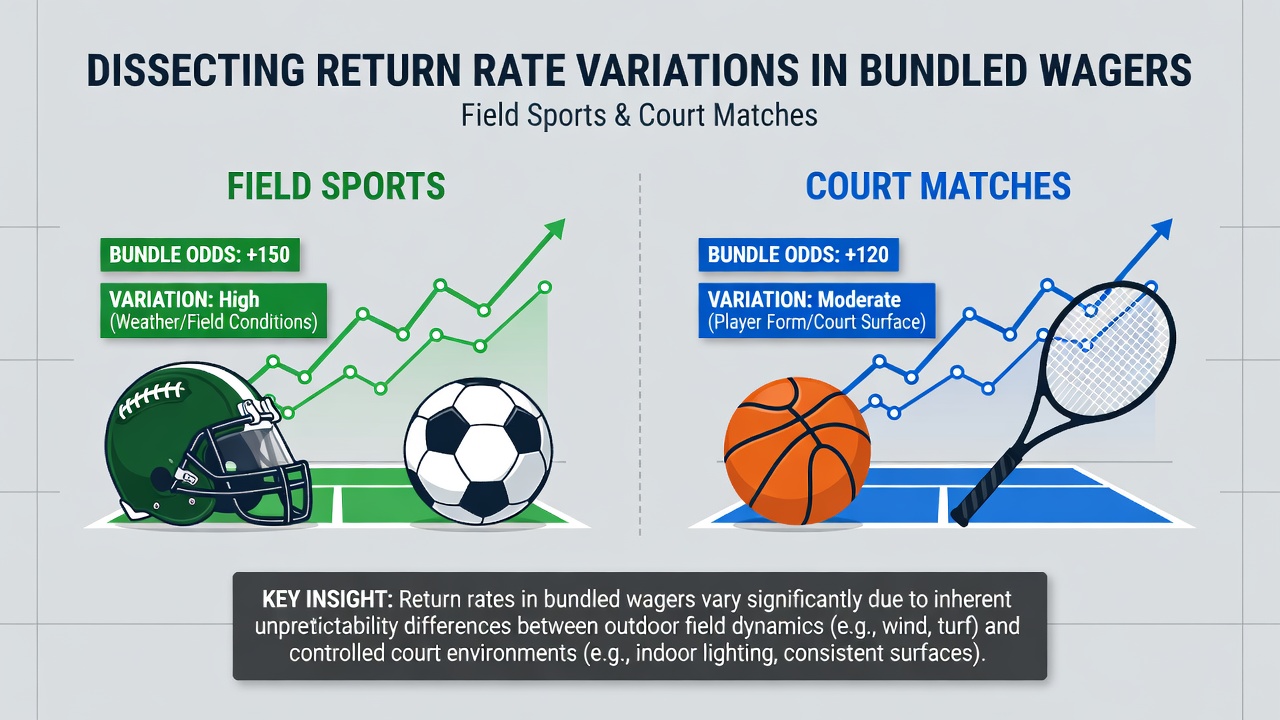
Return rates shift when platforms alter their margin allocation between field and court selections, and this reallocation occurs more frequently during periods of elevated betting activity such as major tournaments. A study released by the Australian Institute of Family Studies in mid-2026 examined 12 months of transaction data and found that bundles containing at least two court matches experienced a 1.8 percentage point drop in average return when live odds updates occurred within 90 seconds of each other, whereas bundles dominated by field sports showed only a 0.9 percentage point decline under identical conditions. The difference traces to the higher frequency of price changes in tennis and basketball markets, which forces platforms to widen spreads to protect against rapid information flow.
Settlement timing also contributes to the observed variation because some platforms apply final adjustments to bundled payouts after all legs conclude, while others lock the multiplier at the moment of placement. In November 2026, several operators introduced automated margin buffers on mixed bundles that activated whenever the combined probability exceeded a preset threshold, and those buffers reduced the published return by between 0.6 and 1.4 percentage points depending on the total number of legs. Those adjustments appeared most often on bundles that paired high-liquidity soccer markets with lower-volume basketball quarter markets, creating a measurable gap between platforms that used the buffer and those that did not.
Comparative Data Across Event Types
When analysts isolate bundles that contain only field sports, the return rate distribution narrows considerably compared with mixed bundles that add court selections. Figures released by European regulators in October 2026 placed the standard deviation of returns on pure soccer accumulators at 1.1 percentage points, whereas the same metric rose to 2.3 percentage points once tennis or basketball legs entered the equation. The increased dispersion stems from the interaction between slower-updating field sport odds and faster-moving court sport lines, which produces wider gaps in the final multiplier once the platform recalculates the aggregate probability. Platforms that refresh court match odds every 30 seconds rather than every 90 seconds recorded the largest swings in bundle returns during the same monitoring period.
Conclusion
Return rate variations in bundled wagers that combine field sports and court matches therefore reflect the cumulative effect of differing margin policies, update frequencies, and settlement rules applied by each platform. November 2026 data confirm that these differences remain measurable across operators even when the underlying events stay constant, and the variations become more pronounced as the number of court selections within a bundle increases. Continued monitoring of these patterns provides the clearest view of how individual platform mechanics translate into distinct payout outcomes for bettors who construct mixed-sport packages.