Mapping Incentive Flows from Basketball Court to Tennis Baseline and Racing Oval
Written by Quinn Powell · Sep 12, 2026
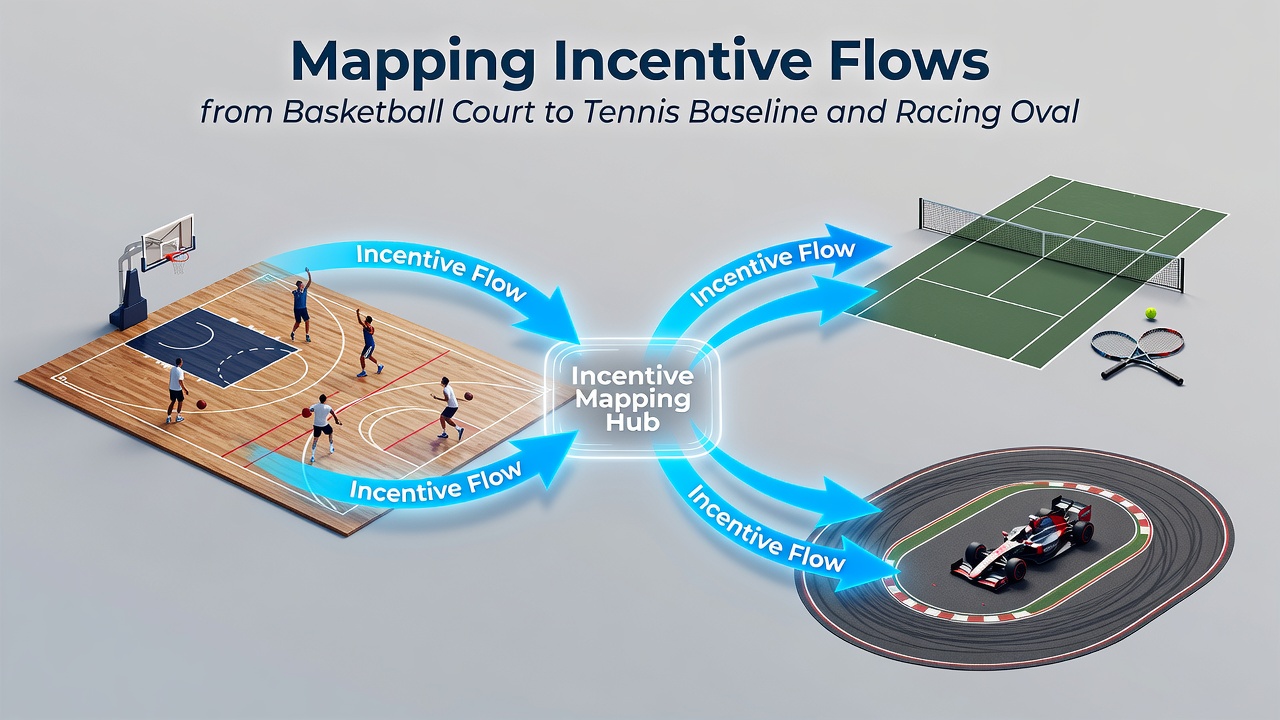
Mapping Incentive Flows from Basketball Court to Tennis Baseline and Racing Oval
Professional sports operate through layered incentive systems that connect performance metrics on the basketball court with baseline consistency in tennis and lap-time optimization around the racing oval, where leagues and governing bodies allocate rewards based on measurable outcomes tracked across seasons. Researchers have documented how these flows operate through contracts, performance bonuses and sponsorship tiers that shift resources between disciplines according to market data and participation rates. Data from multi-sport analyses reveal that incentive structures in basketball often serve as reference points for tennis federations and racing authorities when they design their own reward schedules, since basketball seasons generate high visibility metrics that translate into comparable benchmarks elsewhere.
Core Components of Cross-Sport Incentive Mapping
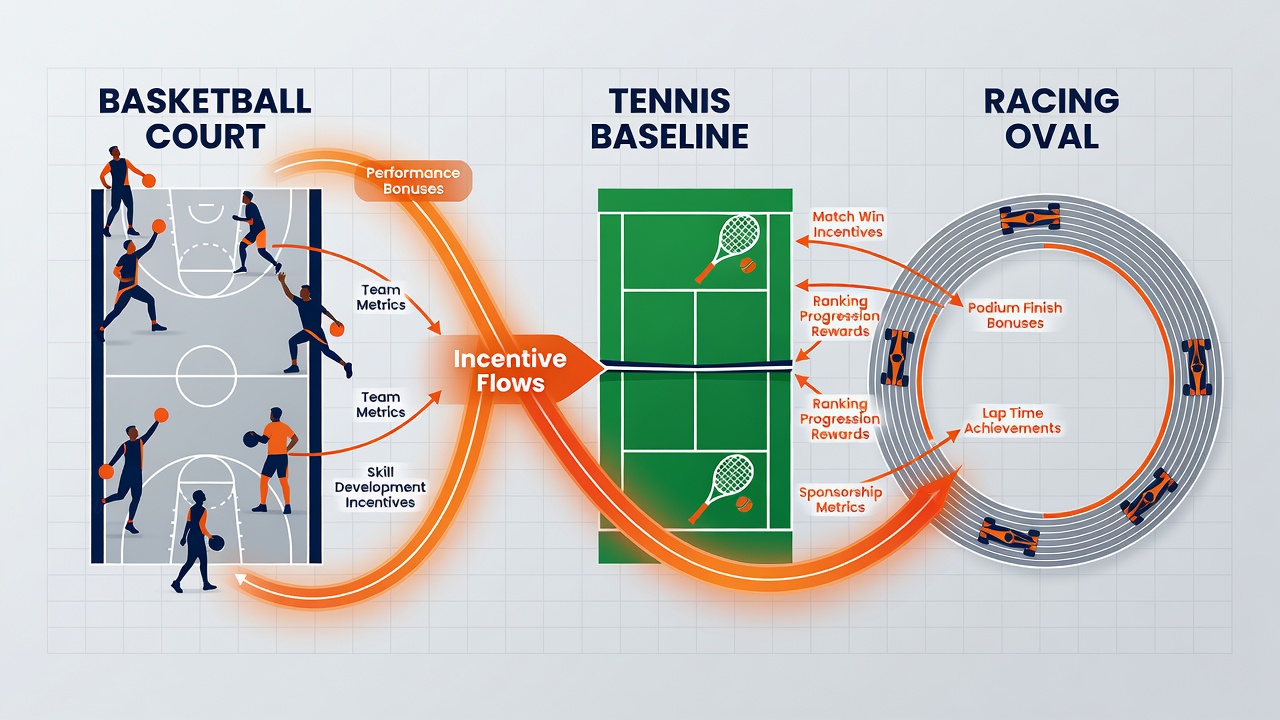
Mapping begins with identification of primary reward drivers such as win percentages, ranking points and purse distributions, then traces how those drivers influence secondary benefits like endorsement deals and development funding. Observers note that basketball leagues publish detailed salary cap and bonus frameworks that tennis organizations reference when adjusting prize money allocations, while racing bodies incorporate similar performance-linked clauses into owner and jockey agreements. Studies conducted by academic institutions show these mappings create predictable pathways where success in one sport can unlock opportunities in another through shared sponsorship networks and media rights packages.
Data Patterns Observed Across Venues
Figures compiled from league reports indicate that basketball incentive pools, measured in aggregate player compensation, correlate with tennis baseline event funding levels at a ratio that has remained stable over multiple cycles. Racing oval purses follow parallel trajectories tied to attendance and broadcast metrics, creating a feedback loop where strong basketball seasons coincide with expanded tennis and racing reward structures. In September 2026 industry datasets highlighted increased alignment between these three domains as digital tracking platforms allowed more precise correlation of performance data across sports.
One analysis from the National Bureau of Economic Research examined how bonus clauses in basketball player contracts influence subsequent career moves into tennis exhibitions and racing ownership stakes, revealing that athletes and investors frequently apply lessons from one domain when negotiating terms in another. The same report documented measurable shifts in resource allocation when governing bodies update their incentive rules, with effects appearing first on the court, then along the baseline, and finally around the oval within a single calendar year.
Regulatory and Institutional Influences
Government agencies and trade organizations shape these flows through policy frameworks that standardize disclosure requirements and limit certain types of performance-based payments. The Australian Sports Commission has published guidelines that affect how incentives are structured across multiple codes, while the European Commission Directorate-General for Education, Youth, Sport and Culture maintains oversight mechanisms that impact cross-border sponsorship agreements linking basketball, tennis and racing entities. These institutional inputs create standardized reporting formats that make incentive mapping more transparent and allow analysts to compare reward structures directly.
Practical Examples from League Operations
Take one basketball franchise that introduced mid-season performance escalators; records show those same escalator models appeared in tennis tournament hospitality packages within two cycles and later in racing owner bonus schedules. Another case involved a tennis governing body revising its ranking-point incentives, after which racing authorities adjusted their handicap weighting systems to maintain competitive balance across events. Observers have tracked how these adjustments propagate through shared media partners and equipment suppliers that operate in all three sports, creating indirect but measurable connections between originally separate incentive pools.
Conclusion
The mapping of incentive flows across basketball, tennis and racing continues to evolve through data integration and institutional coordination. Current records demonstrate consistent patterns where performance metrics generated on one surface inform reward design on the others, supported by regulatory frameworks that promote comparability. Continued documentation of these pathways provides stakeholders with clearer visibility into how resources move between the court, the baseline and the oval over time.